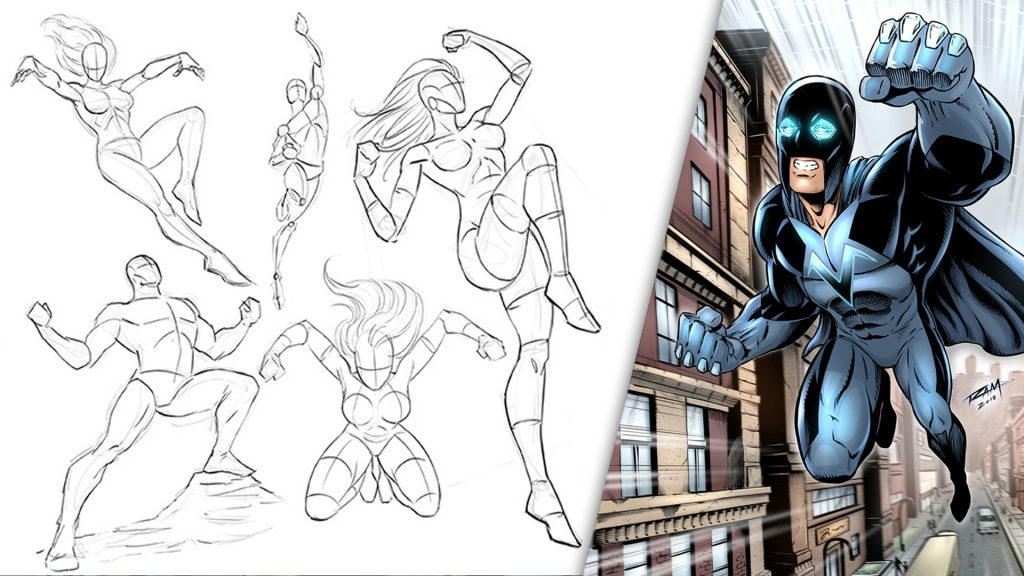
Ever wonder what steps you should take to improve your comic style art?
I always get this question, “How can I improve my comic art?” I will admit the most common answer you will ever hear in your life is Practice! It’s is the answer that no student wants to hear. I remember hearing it and thinking, “I practice like a madman already. How much does it take?”
Instead of giving you the lazy answer, let’s delve into the details a bit more. It isn’t enough to know that you need to practice a lot. You need to know what to practice and why. You also need a few other concepts to think about. Strangely enough, it’s not all about practice. Let’s jump on in!
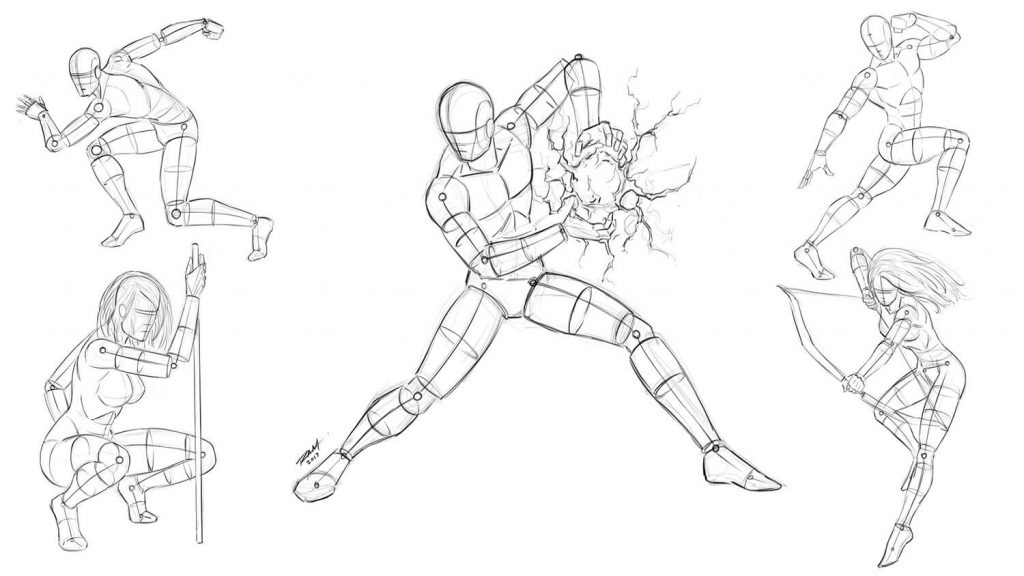
TIP#1 Practice Daily!
Wait! You just said?! I know, it seems like a low blow doesn’t it? It really is the first and easiest answer. You have to practice daily to improve. Long gaps will hurt your development.
What should you practice is probably the best question but you have to answer that one for yourself. Find the weakest link in your chain and make it the strongest. If you can’t draw faces but you draw really great muscles then you know what you need to do. It is hard to do because we gravitate to what we are confident at.
So fight the habit and dedicate a good portion of your studies to what matters most or something that is holding your work back from being amazing.
TIP#2 Create Finished Art!
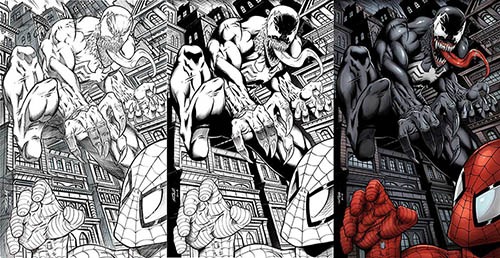
You need to create finished pieces of comic art or you are setting yourself up for potential failure. Sketching and studies are extremely important of course but if you don’t focus on completing your work you won’t develop a strong portfolio and ultimately won’t secure any work.
People don’t commission or hire based upon sketches. Finishing your art pieces will also force you to deal with the fact you may not be able to draw feet, hands, or faces. It is easy to hide those things in rough sketches. ( Maybe not the faces. )
Completing your work will also make you fully aware of how fast or slow you can draw. Extremely important if you hope to work as a professional artist.
TIP#3 Ask for Constructive Criticism!
The reason I say to ask for it is I feel that if you request it, you are far more likely to receive it as sound advice. We have all gotten someone’s unwanted criticism at times and just decided to not accept it. Truth be told, it only hurts you to keep a closed mind to it.
Even someone that is a complete stranger draws like a
When you jump into the professional world anyone and everyone can quickly become your critic and even your boss. Best to get used to it now and stomach your sensitive little ego!
TIP#4 Get Back to the Basics!
We sometimes get to a certain level in our art and we think we are the next Jim Lee or Todd McFarlane so we go for more advanced drawings. Hoping to hide any flaws in our work by applying our fancy
Getting back to the basics of drawing gestures, primitive shapes, understanding perspective, composition, understanding your tools, jumping back into your art books, and so on is often overlooked because we think we are better than we actually are. It is easy to get caught up in all the “likes” on social media from people that want to be supportive of our work or just get a bit of tunnel vision.
We have to remember that our polished art needs a sound foundation to rely upon. Only then can it soar to the heights of Mount Olympus or whatever fantasy reference you prefer.
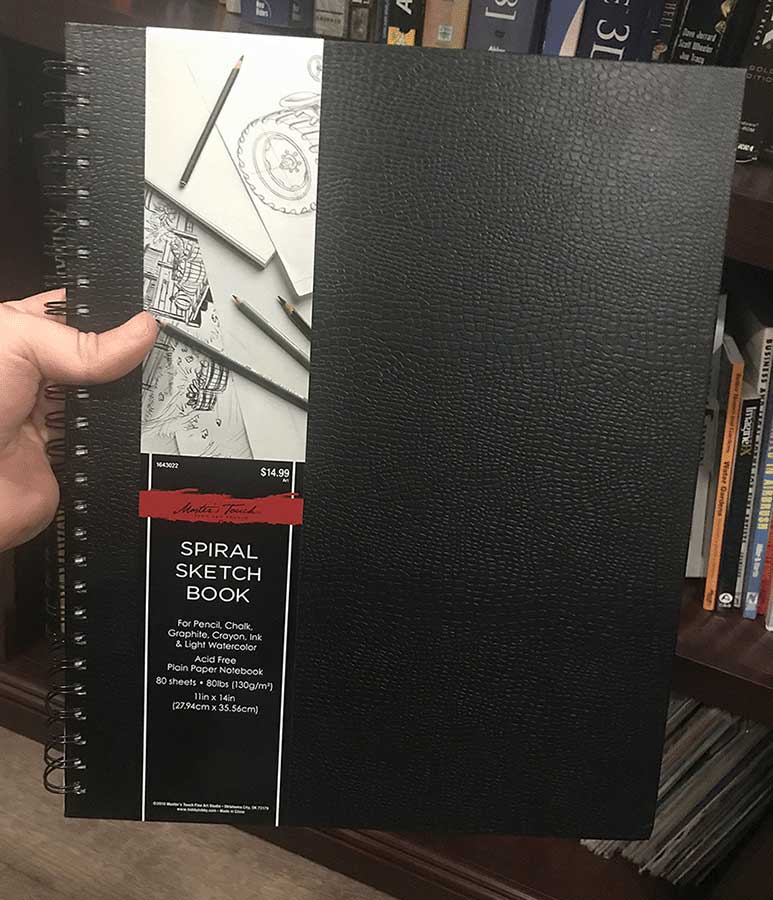
TIP#5 Keep an Actual Sketchbook!
I really wish I would have done this more consistently through my younger years. I have tons of sketches on loose pieces of paper and although I love sifting through those fond memories a lot of them aren’t dated.
A series of completed sketchbooks gives you a more somewhat linear view of what you have accomplished. You still need to be adamant about dating your work of course. Sketchbooks are much more organized and as artists we need all the help we can get in that area. ( Well, I do at least! : /)
TIP#6. Go to the Comic Conventions!
This is so important if you truly want to be a professional comic book artist. The comic conventions are an amazing way to learn and grow as an artist. Even if you don’t like spending money to have a table, it is still a great experience to attend and show your work around.
This part ties into the constructive criticism from Tip #3. Showing your comic art and starting some dialogue with others about it, will teach you a lot. Just be receptive and leave your ego at home. You can’t fill a cup that is already full, right?
Also, the conventions give you a “behind the scenes” look at what works and what doesn’t. Speak to as many artists, writers, and editors as you can. The nuggets of advice you will learn from them is priceless!
TIP#7 Update your Portfolio Often!
As you complete new works of art, update your portfolio. Don’t just add to it either. Your better works should incline you to show the lesser works to the nearest exit. Your portfolio should only have room for your best comic art.
Don’t make the mistake of showing an editor a stack of sketches mixed with a few covers. It should contain 10 to 15 of your best pieces of art. It should also reflect what you want to be as a comic artist. If you want to draw books, then you need sequential storytelling not a bunch of pinups.
Also, if you do show this work to an editor, don’t make excuses on why it isn’t your best work. Only show your best work and listen more than you talk. Becoming defensive shows weakness. Just take notes and go back to the drawing board and make improvements.
In my opinion, you should also make sure to include a nice range of your abilities within those pages. Draw people with expressions and emotions as well as super-powered heroes punching through walls. Make good use of perspective and include lots of props like cars, street signs, a damaged fire escape, and so on. It shows that you can draw lots of little details and enrich the scene. If you can illustrate a scene with lots of clutter and make it read well visually then you have an edge on a lot of artists. Don’t be
TIP#8 Draw with a Focus!
It’s not good enough to just draw. You have to have a focus. This sort of ties into Tip #1. You have to go into your drawings with a purpose.
Are you going to draw an amazing piece of fan art to show the world what you can do with their favorite character? Are you developing your studies of anatomy and poses for the next few hours? Are you going to strengthen your understanding of “Dynamic Light and Shade” with the Amazing Burne Hogarth Book you picked up? Get it here with my Amazon Link – https://amzn.to/2YsP0yO ( I highly recommend all of his books! ) Are you going to enhance your speed by doing timed studies of areas within your work?
Having an intention and focus is much more powerful than simply drawing whatever pops into your melon. It allows you to maximize your efforts. You will learn much faster by doing this and not get burned out so quickly by spending time on the wrong aspects of your work.
TIP#9 Sell your work!
You may think that this is only reserved for the pros. So not true! I started my art business in high school. I would barter my amazing ( unrefined ) art skills for good grades and social status. We all know good grades may eventually help you pay the bills but you might say, “You can’t pay your bills with social status.” Maybe not directly but it will translate to income over time.
It’s basically branding and self-promotion. Becoming the guy or girl known for being an amazing artist will get you the word of mouth that sells the work. So why all the enfasis on selling your work. It teaches you a lot about how the real world process will work.
Being able to take instructions from a client, negotiate a deal that is mutually beneficial, make changes as needed, communicate clearly, tame your ego, and deliver your artwork on a deadline. This Tip will probably teach you the most about yourself and if you can’t do this for regular joe’s then you may not be ready for the big leagues.
TIP#10 Use Reference and Draw from Life
Just because we are comic artists doesn’t mean we can’t use reference. In fact, it is quite the opposite.
Reference can take a decent artist and turn them into something amazing. I am all for drawing from imagination as much as possible but sometimes you just have to feed the brain box. Draw from life and interpret it into your own style. Then your comic storytelling will know no bounds.
Your fans will love seeing all those references ran through your creative filter. Just don’t trace or else you will weaken your ability to convert things into your own style or make changes as quickly.
TIP#11 Study from the Masters
Masters can be anyone that you admire really. They don’t all have to be Leonardo Davinci for you to learn from them. Knowledge hides in the most inconspicuous places.
Make sure to study the work but not copy it or pass it off as your own vision. If you adhere to the original work you need to credit the artist. That being said, it is actually a fantastic way to level up your art skills. It allows you to peer through their eyes and follow the choices that they made.
As a comic artist I often ink the work of others that I am inspired by. Not because I want to be an inker but because I learn immensely every time I do it. Their lines are amazing to me for a reason, so inking their work can demystify some of the
These are just some of the things I do to improve my comic art on a daily basis. I hope you find these tips to be valuable and I would love to know what are the ways your improve your art! Comment below and feel free to share the post if you enjoyed it!
Sincerely,
Robert A. Marzullo
Ram Studios Comics
Want to learn more about my comic art process. Check out my courses below…
How to Improve Your Figure Drawing – Step by Step –
Or my Course, “How to Draw Heads from Any Angle” Link –